
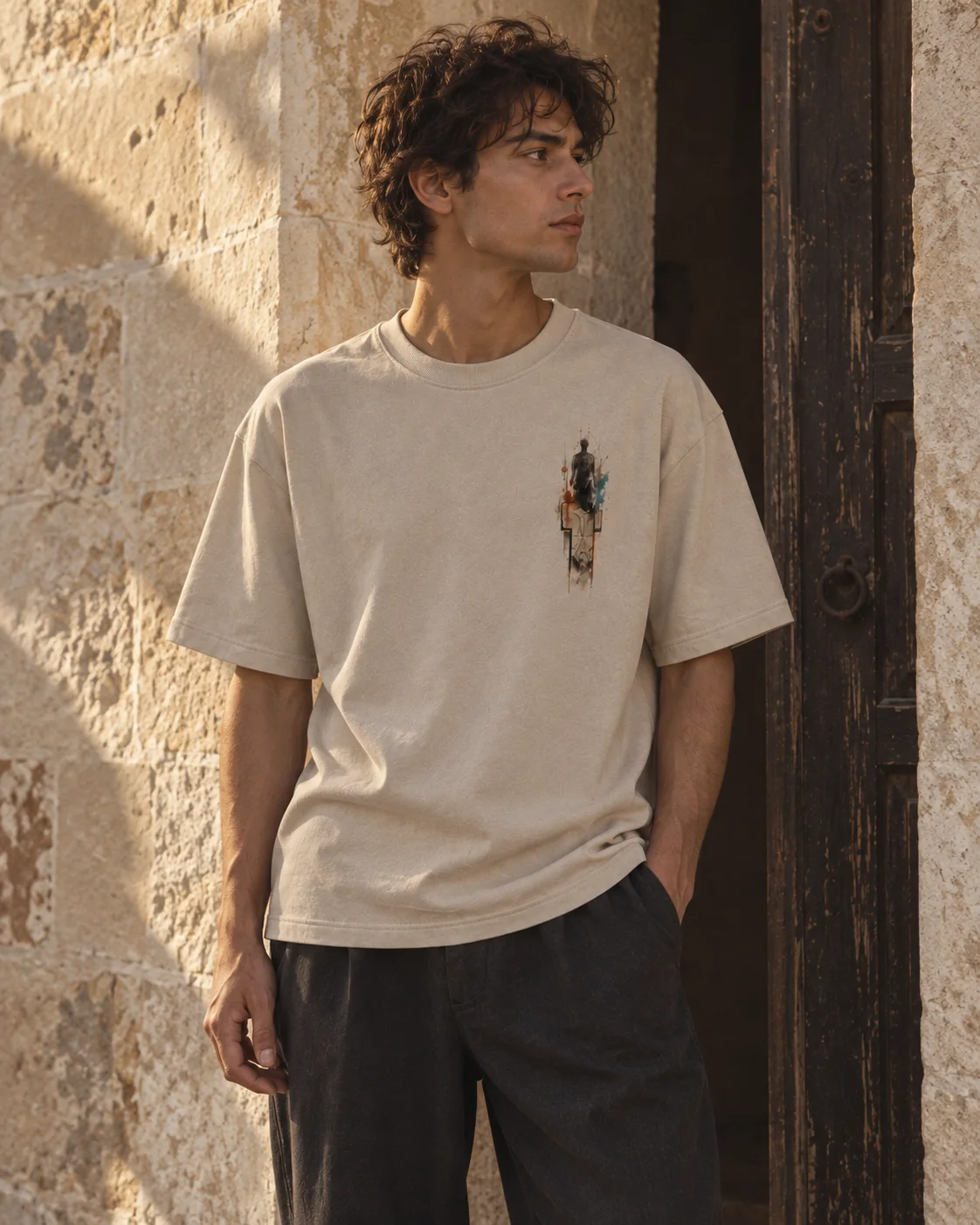
FOUNDATIONS · Salon I · Göbekli Tepe
The Stone’s
Dream
Before anyone had sown a field, sixty-ton stones were raised and a circle was drawn.
Stone · Coming soon
Notify me when ready →Eleven thousand years ago, before anyone had sown a field, people lifted stones weighing sixty tons and drew a circle. In the middle of the circle they raised two great pillars: they have arms, hands meeting at the belly, a visible belt — but no face.
The T-shaped body in the design is that figure. The fine incised lines on it are not carved deep into the limestone but scraped; they sit on the surface of the stone and do not enter it. The animals around it are not hunted animals but feared ones — snake, scorpion, vulture.
When the structure was finished, it was deliberately covered with earth. What carried Göbekli Tepe to the present was not building it, but burying it. That is why the lower part of the design slowly merges into the soil: the work is not completed, it is buried.
The missing face is not a lack. We do not know who raised it. The only thing we know is that it was raised.
A hill at the foot of the Germuş range, north-east of Şanlıurfa. The settlement dates to around 9500 BCE, the Pre-Pottery Neolithic.
T-shaped pillars set inside circular and oval buildings. The excavated stones stand 3–6 metres tall and weigh 40–60 tons.
The T pillars are abstract human figures: arms descending at the sides, hands meeting on the front of the stone, a belt and loincloth in relief. There is no face.
Snake, fox, wild boar, crane, vulture, scorpion, spider, aurochs. Most of those depicted are not domesticated; it is not a list of game.
For a long time Göbekli Tepe was described as “the world’s first temple”, a ceremonial site where no one lived. That reading is now contested: hearths, consumed animal and cereal remains, structures interpreted as cisterns, burials and many small buildings whose layout suits daily use have been found on the site.
Today Göbekli Tepe is counted as part of the Taş Tepeler cluster of settlements spread over more than 100 kilometres. The current frame is this: ritual and daily life were not separate. “Temple or settlement” may be the wrong question.
- The abstract human silhouette of the T pillar — arm, hand, belt; no face
- Circle within circle: nested building plans
- The relief bestiary: snake, fox, crane, scorpion
- Incised line on limestone — not deep, scraped
- Burial and exposure: the deliberate backfilling of buildings
- The domed silhouette of the mound against the flat plain
- Presenting Göbekli Tepe as “the world’s first temple” as if it were undisputed fact
- Language that feeds pseudo-archaeology: lost civilizations, aliens, hidden knowledge
- Copying the T pillar directly and turning it into a graphic motif
- Compressing the site into a single moment; Göbekli Tepe was used over a long span of time
- Causal claims such as “Göbekli Tepe started agriculture”
- Tourism-brochure aesthetics: sunset, drone shot, golden light
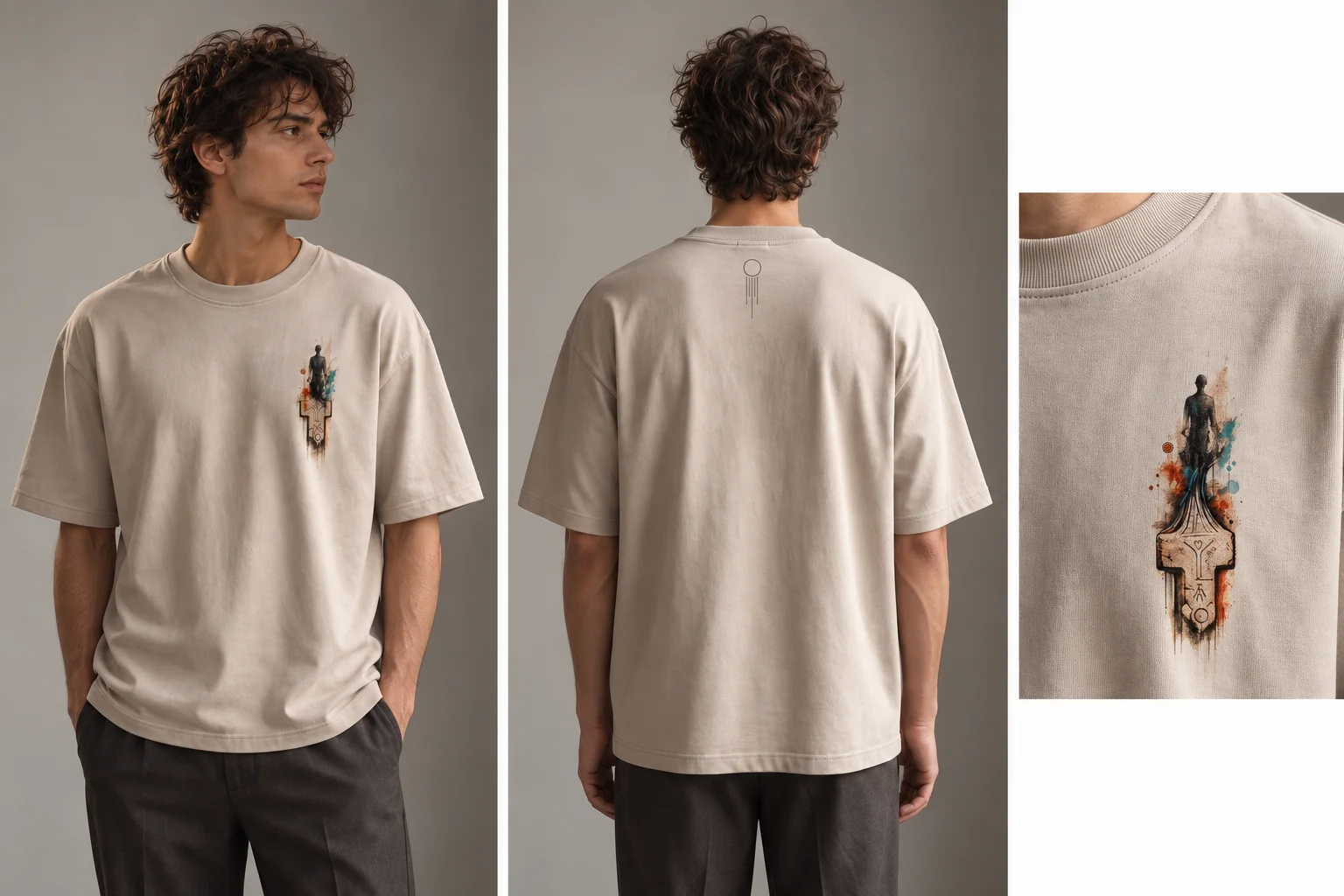
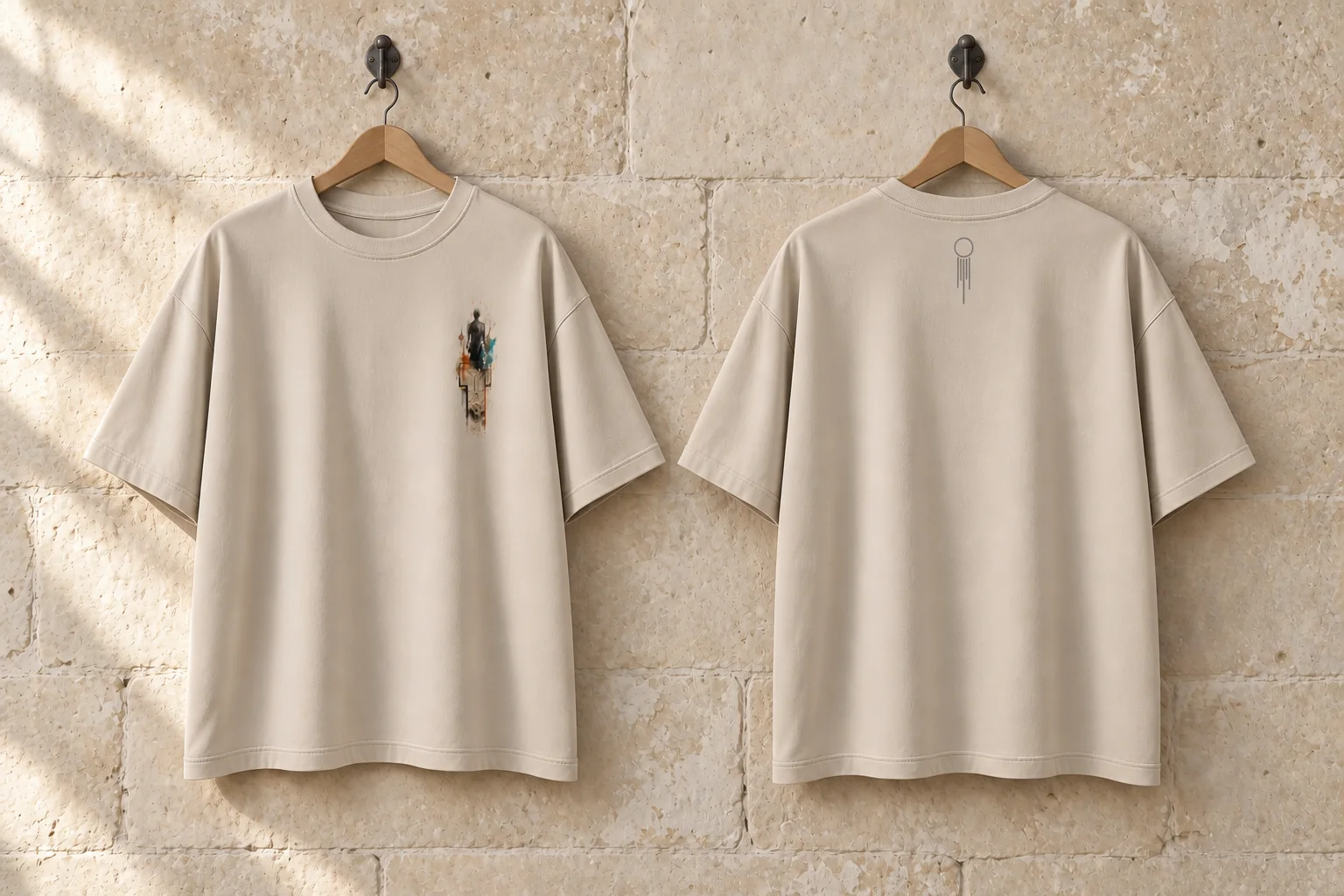
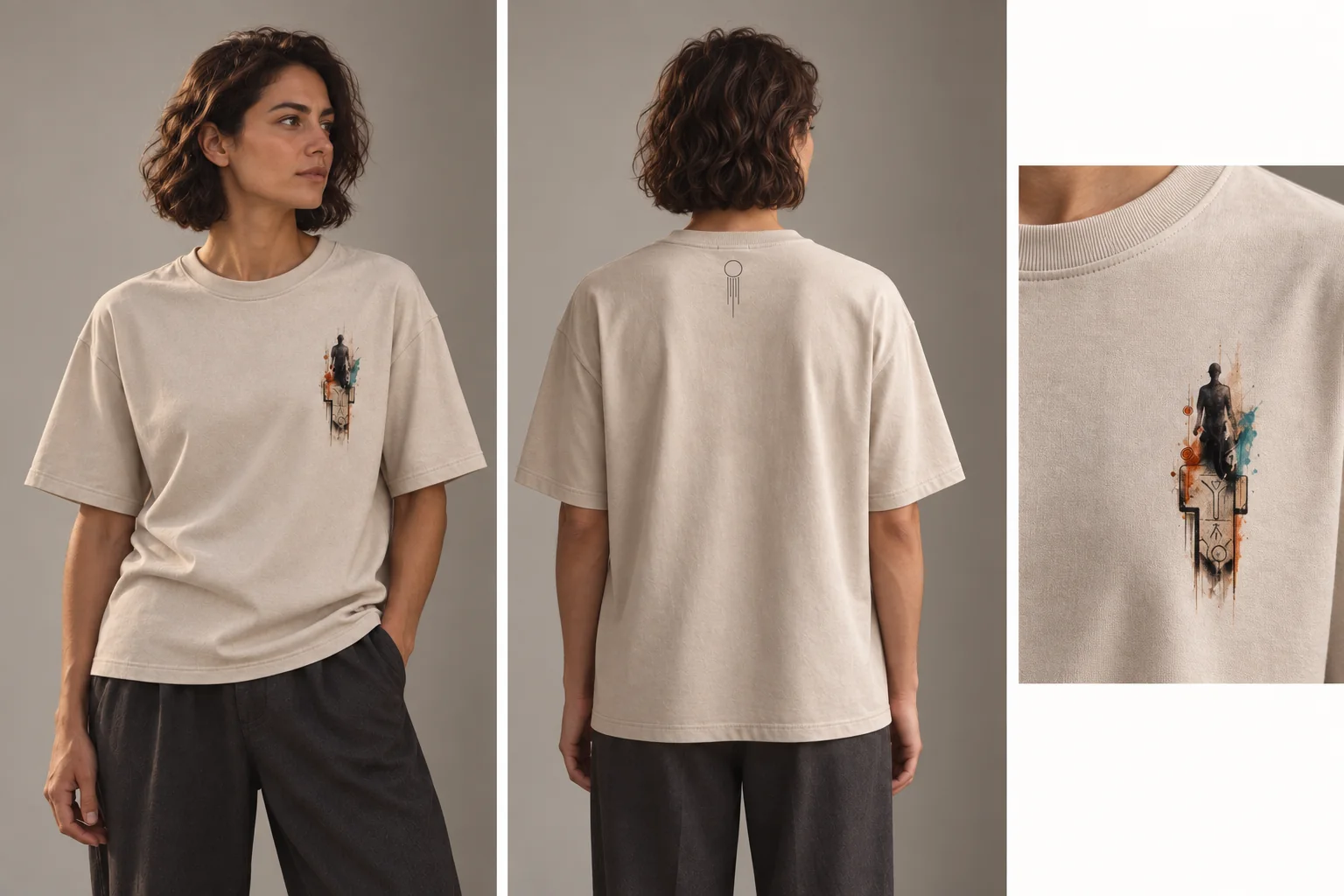
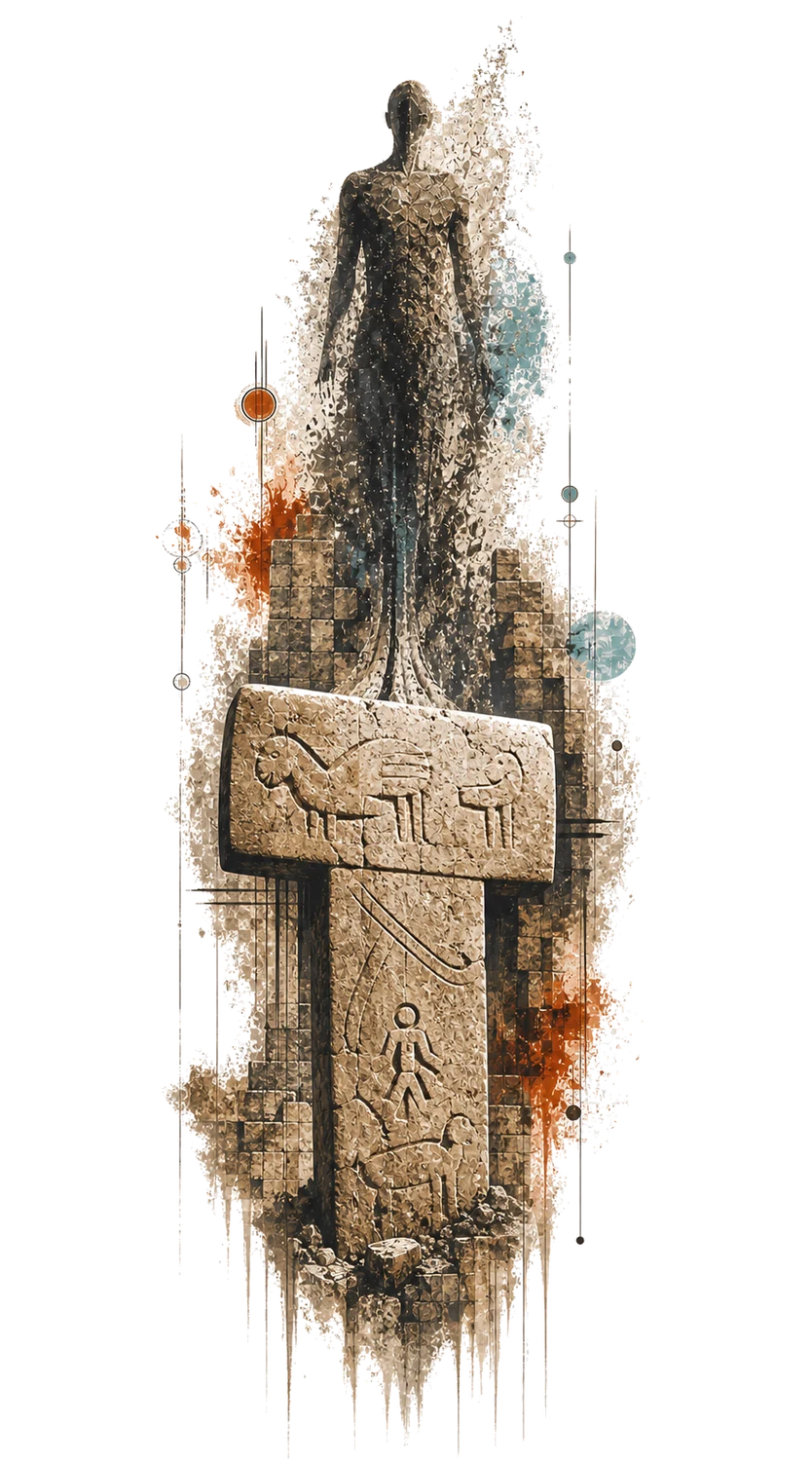 Front print
 Back neck mark
The accent colour never fills a large area — only the section number, a thin rule and the floor-plan strip. The ground stays Warm White in every salon.
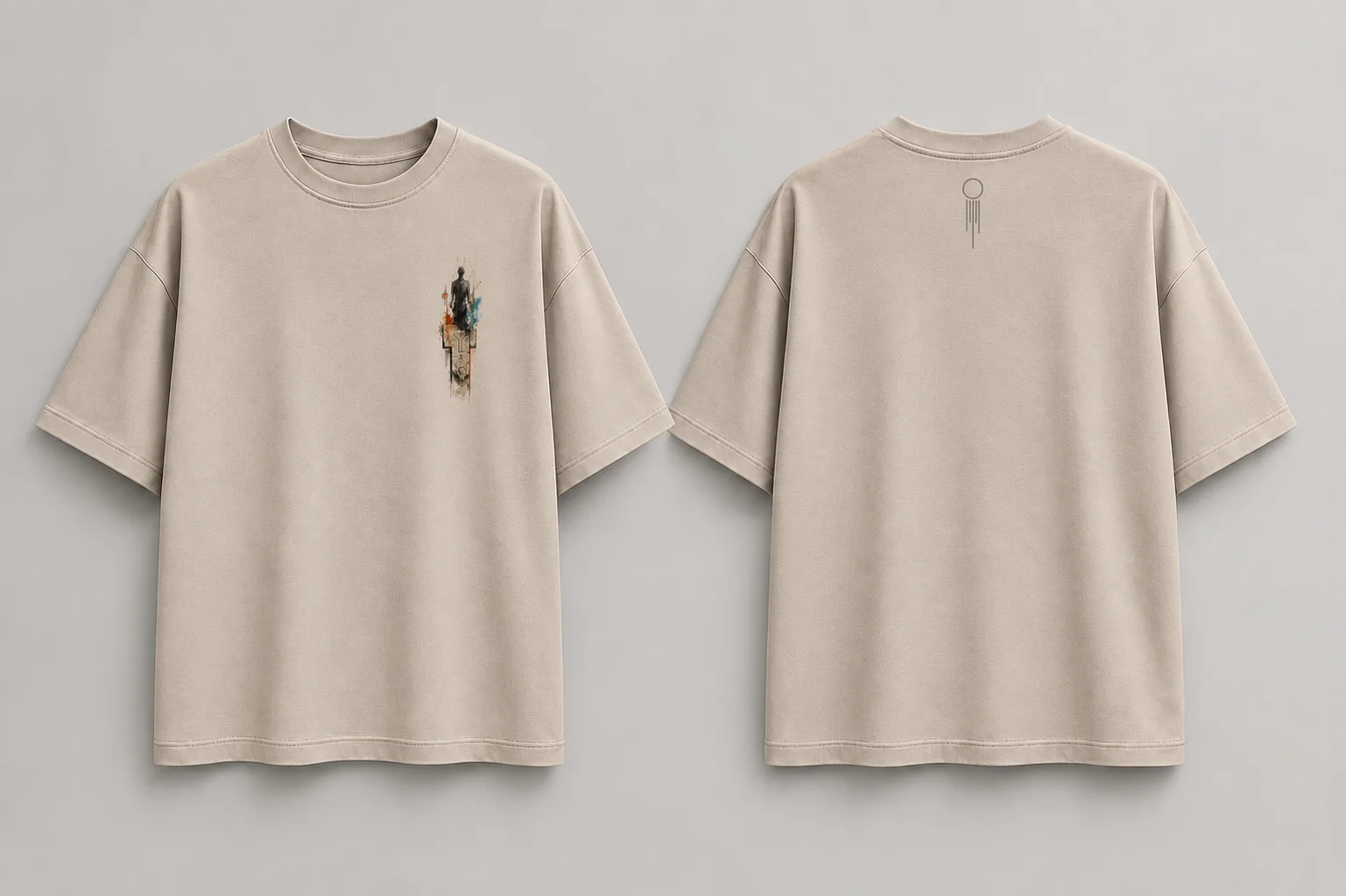
The Stone’s Dream
Every piece belongs to a specific collection and story; it comes with a numbered Provenance Card. The card carries the story it was born from, the colour it was made in, and its place in the archive.
Not a campaign label but an archive record. If the piece changes hands, the card goes with it; its number stays in the ANATOLIYA archive.