
FOUNDATIONS · Salon III · The Peacock
Threshold of
Two Heavens
This bird is not Anatolia’s bird. It came, and it never left.
Deep Green · Coming soon
Notify me when ready →The peacock is not Anatolia’s bird. It came from India, carried as a gift for palaces, and it never left. First it was carved onto sarcophagi, then it entered church mosaics, then the tiles of a Seljuk palace, then the weave of a kilim. Each time its meaning shifted a little; its form remained.
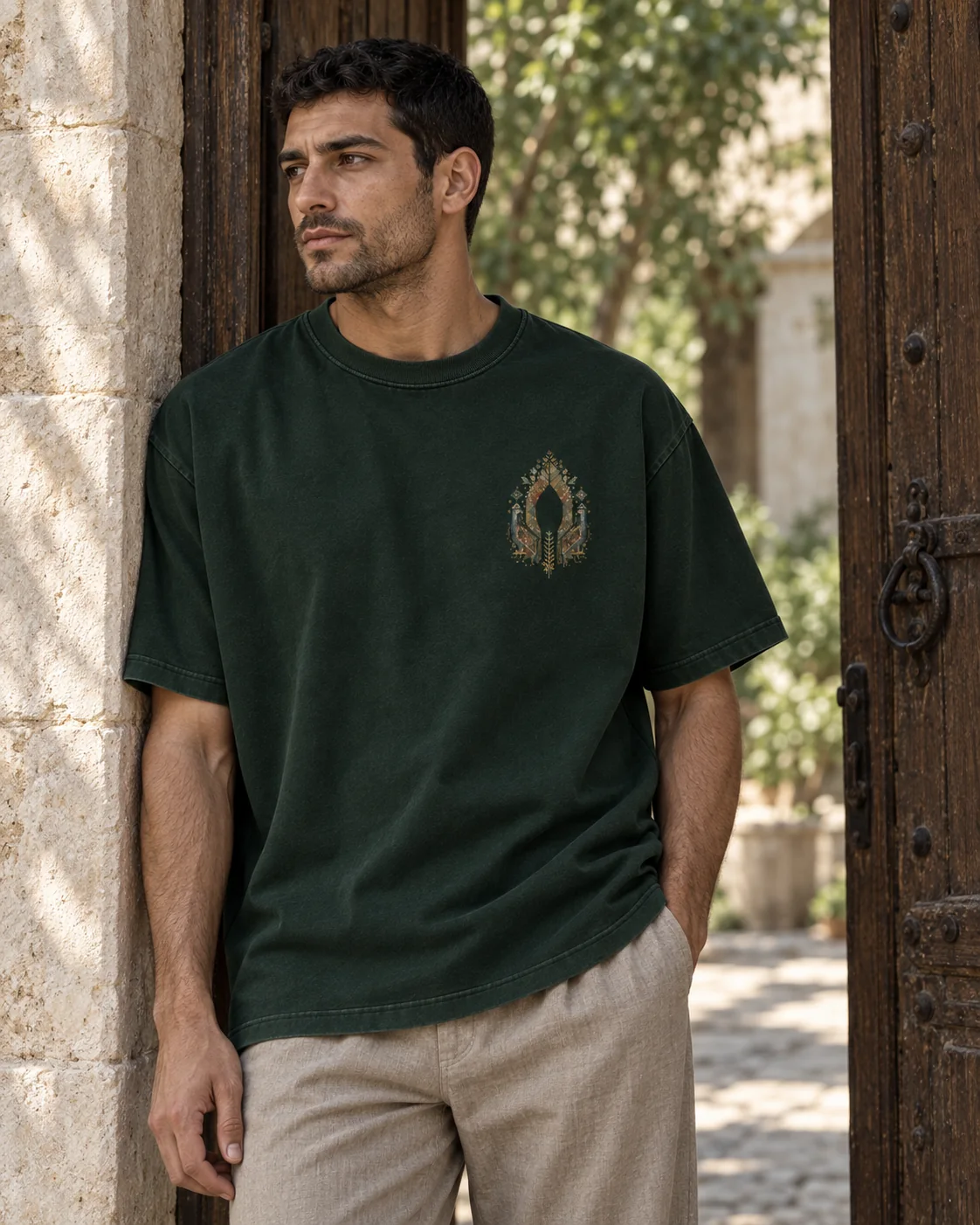
The two birds in the design face outward, not each other. Their bodies are woven from mosaic tesserae and tile squares — they are made of the very material that carried them. Between them rises an arch of feathers pointing upward; the inside of the arch is empty. A thin plant stem in the middle, small geometric rosettes around.
The paired bird is the shared composition of Byzantine mosaic and Seljuk tile: they stand symmetrically on either side of a vessel, a tree or a gate. This design shows the gate but does not say what it opens onto. Two heavens share a single threshold; the threshold is empty.
On the back there is a single feather, its eye open. For centuries in Anatolia the eye of the peacock feather was carried against the evil gaze; hung on doors, pinned to cradles. Here it is not a bead but a mosaic: the eye that watches the back is made of the very material that carried it.
What remains is not the bird. What remains is the habit of drawing it again.
The peacock (Pavo cristatus) is native to the Indian subcontinent. It entered Anatolia through trade and as a gift for courts; it is not a native species.
An image of immortality and resurrection in early Christian art. The ancient belief that its flesh did not decay is the source of that meaning; it appears often on sarcophagus reliefs and in funerary art.
An image of paradise, renewal and spring. The characteristic composition is a pair of peacocks standing symmetrically on either side of a central vessel or fountain.
In Anatolian Seljuk tile art it stands for paradise and court life. The Tree of Life motif is read as the road to the other world; it is depicted with birds on either side.
The other three series are bound to a place: Göbekli Tepe, Ephesus, Troy. This series is bound not to a place but to a motif. Its subject is not the bird but the journey of the motif.
The same two birds; first on a sarcophagus, then in a church mosaic, then on the tile of a Seljuk palace, then on a kilim. The meaning shifts a little each time, but the form stands. The motif endures; its carrier changes.
- The symmetrical pair: on either side of a vessel, a tree or an arch
- The Tree of Life and the birds beside it
- The feather eye (ocellus) — circular, layered within itself; the guardian eye on the back
- Mosaic tessera and tile square: the unit that carries the motif
- Mihrab arch and gate-of-paradise iconography
- The stepped, terraced line of kilim weave
- Presenting the peacock as a “Turkish motif” or “native to Anatolia”; the motif is Indian in origin
- Copying an İznik tile, a Seljuk tile or a kilim pattern outright
- Binding the motif’s religious meaning to a single faith; the same form was used in Christian and Islamic contexts
- Using the Yazidi belief in Melek Taus as a decorative element; it is the sacred of a living community
- Bringing the saturated blue–gold–red palette into the brand’s colour world
- Imitating antique botanical engraving or Victorian natural-history plate aesthetics
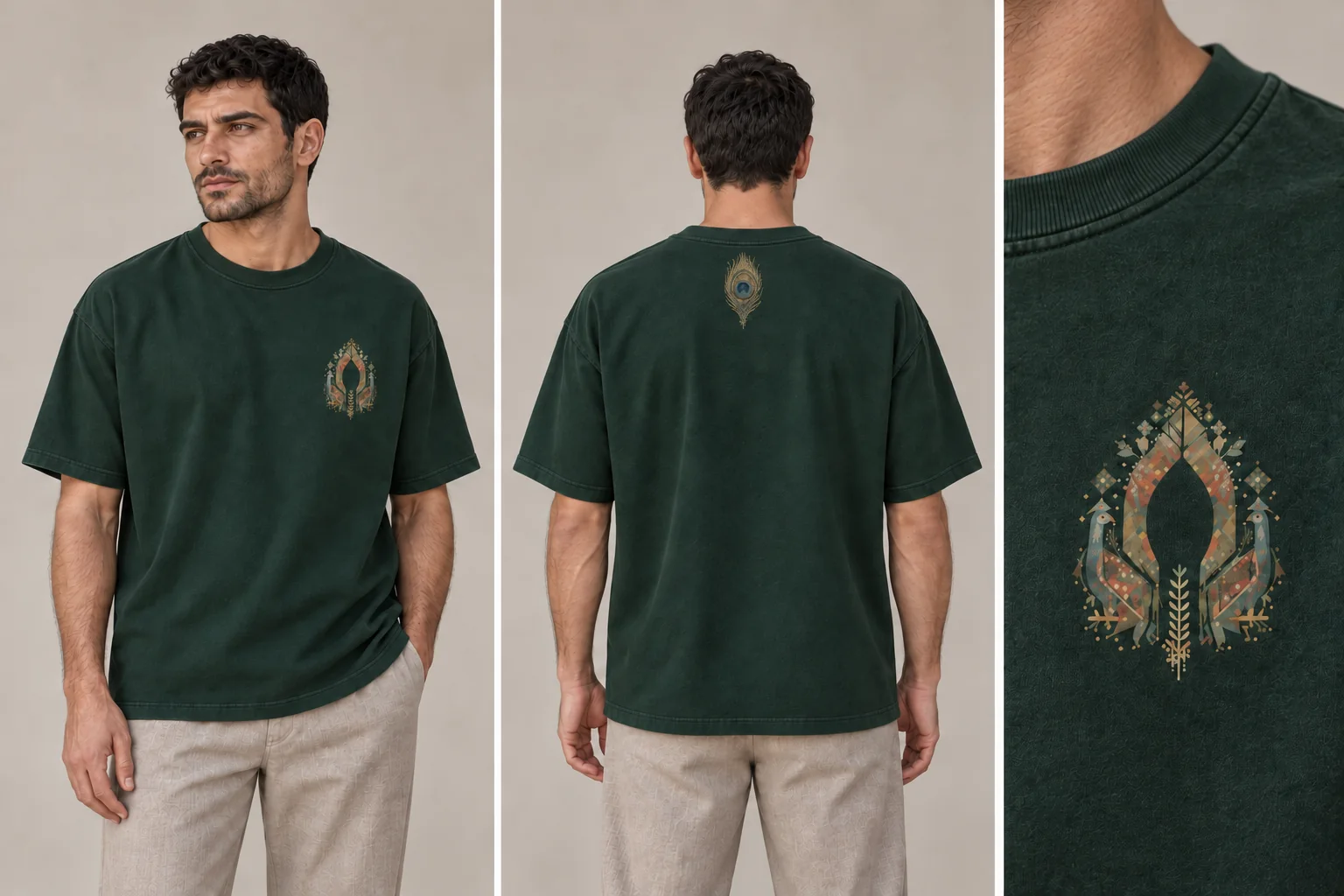
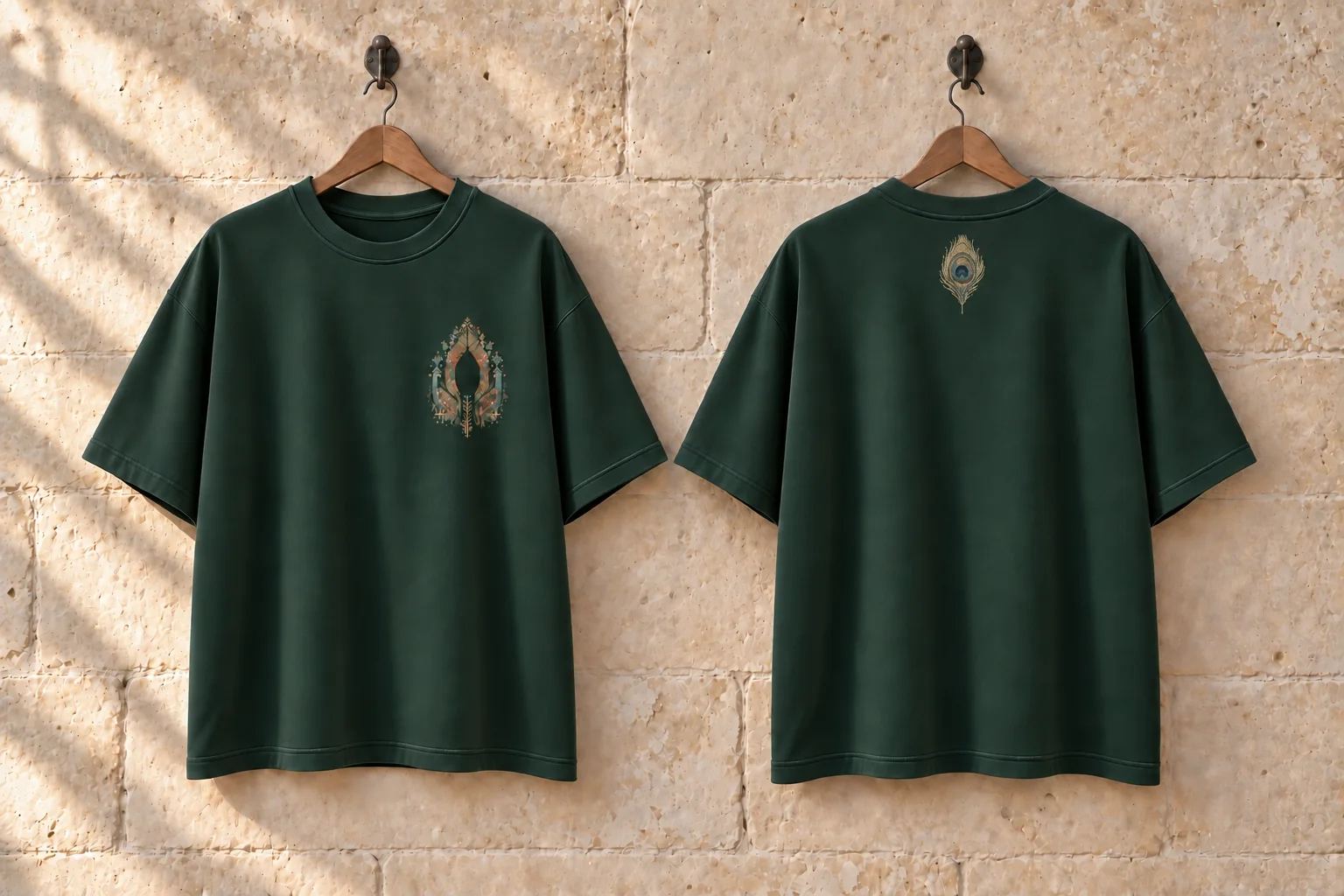
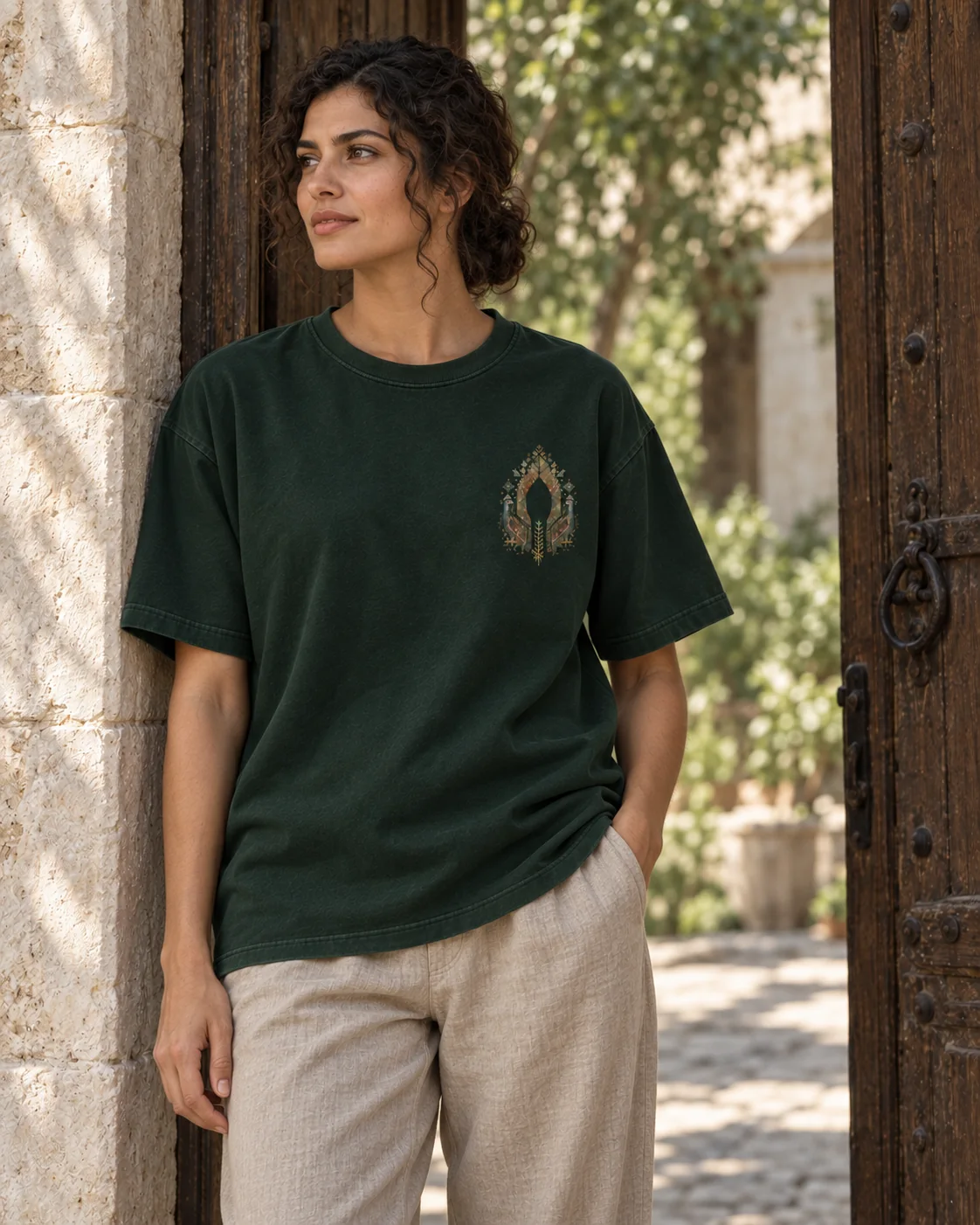
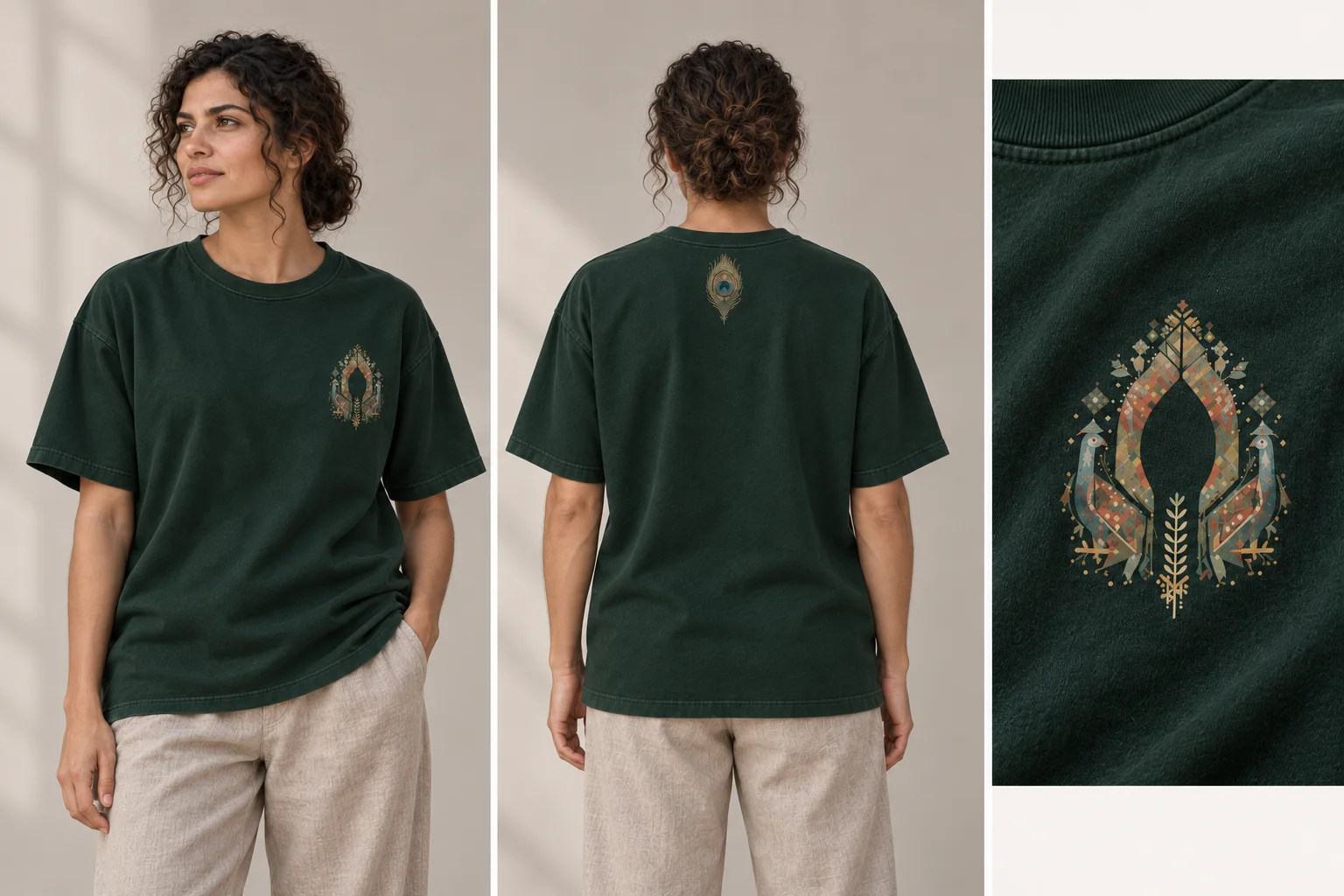
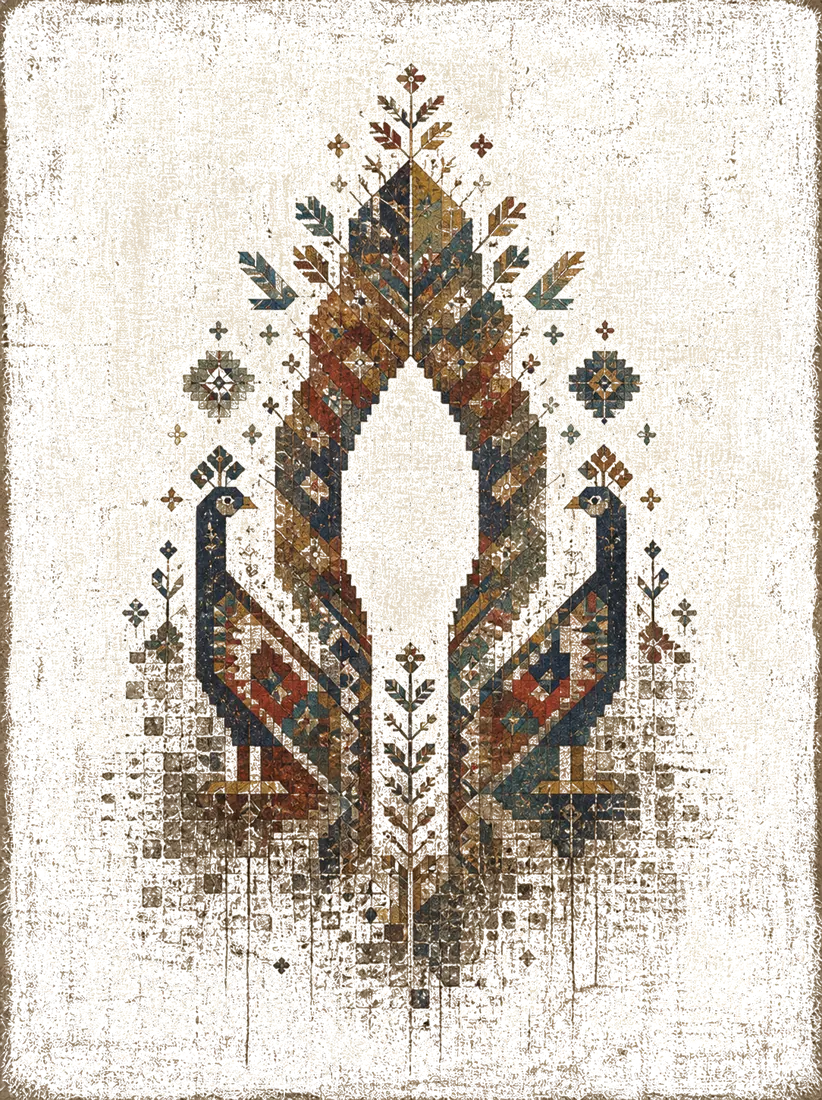 Front print
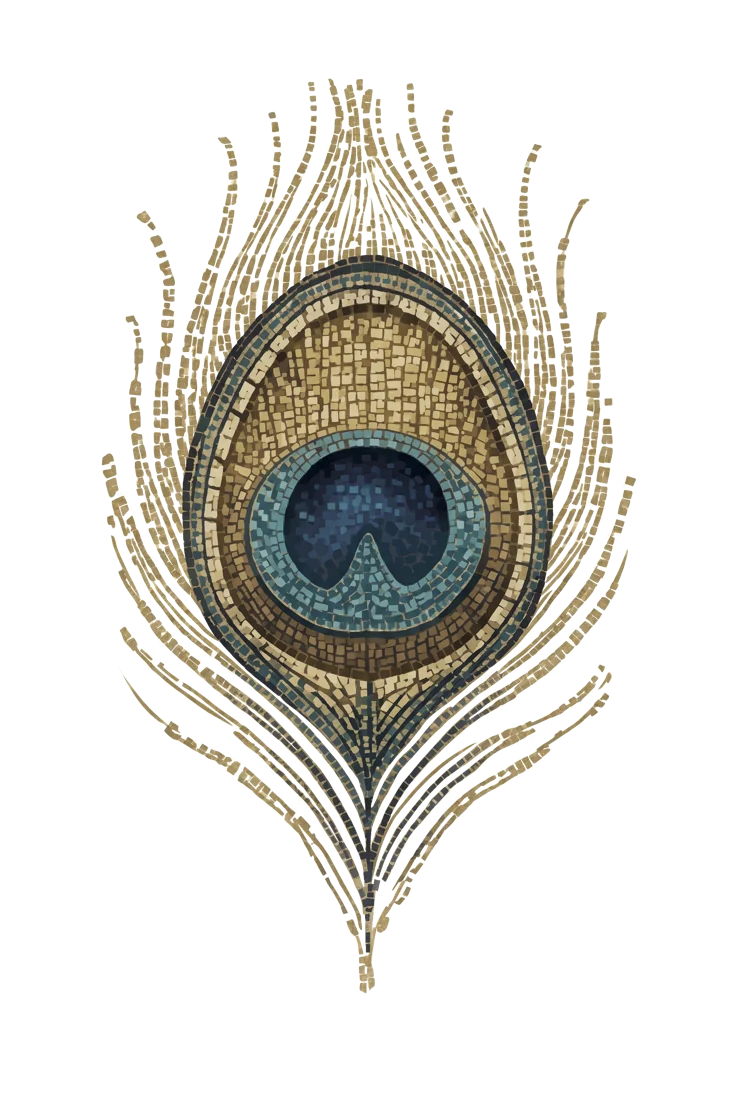 Back · feather eye
The accent colour never fills a large area — only the section number, a thin rule and the floor-plan strip. The ground stays Warm White in every salon.
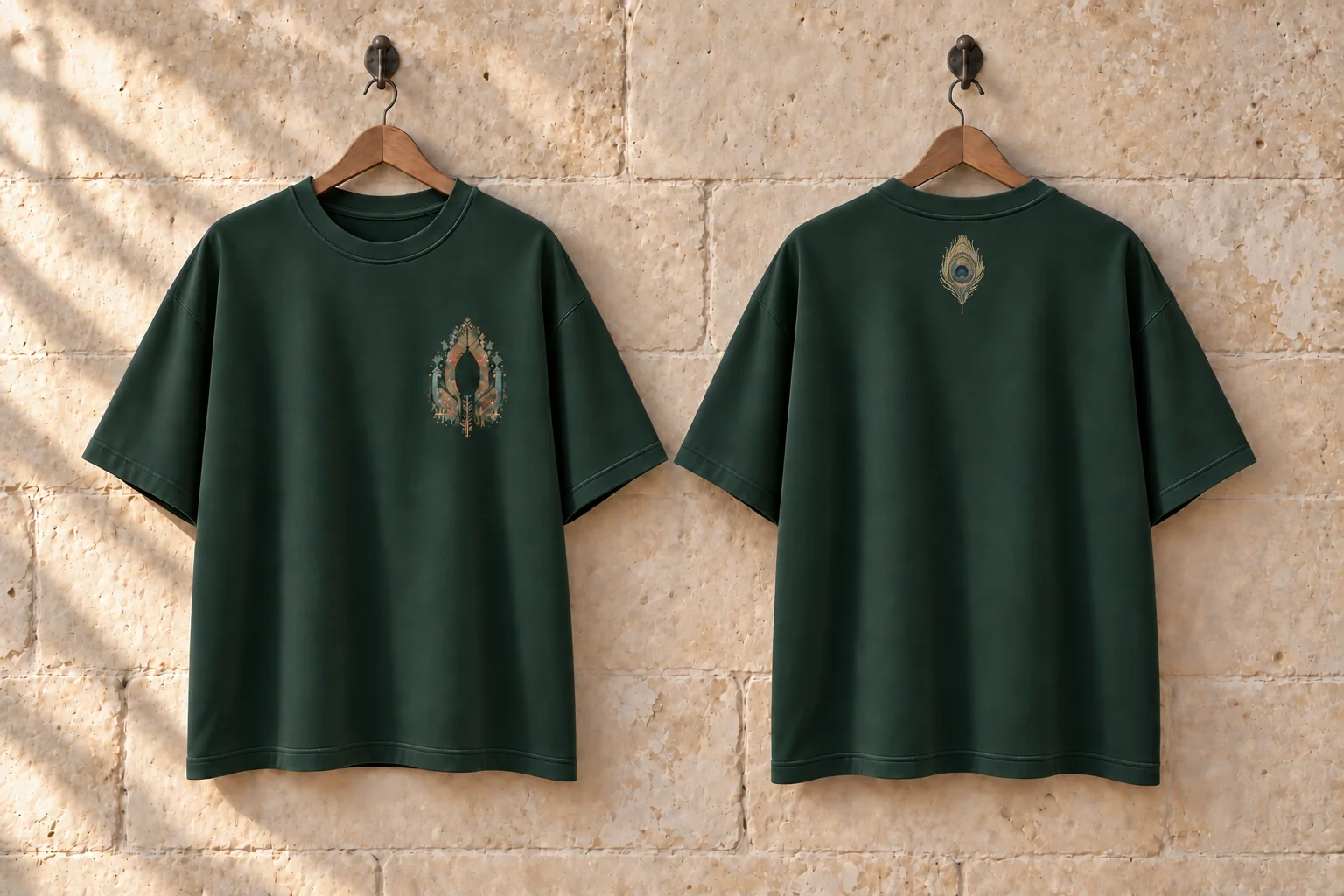
Threshold of Two Heavens
Every piece belongs to a specific collection and story; it comes with a numbered Provenance Card. The card carries the story it was born from, the colour it was made in, and its place in the archive.
Not a campaign label but an archive record. If the piece changes hands, the card goes with it; its number stays in the ANATOLIYA archive.