
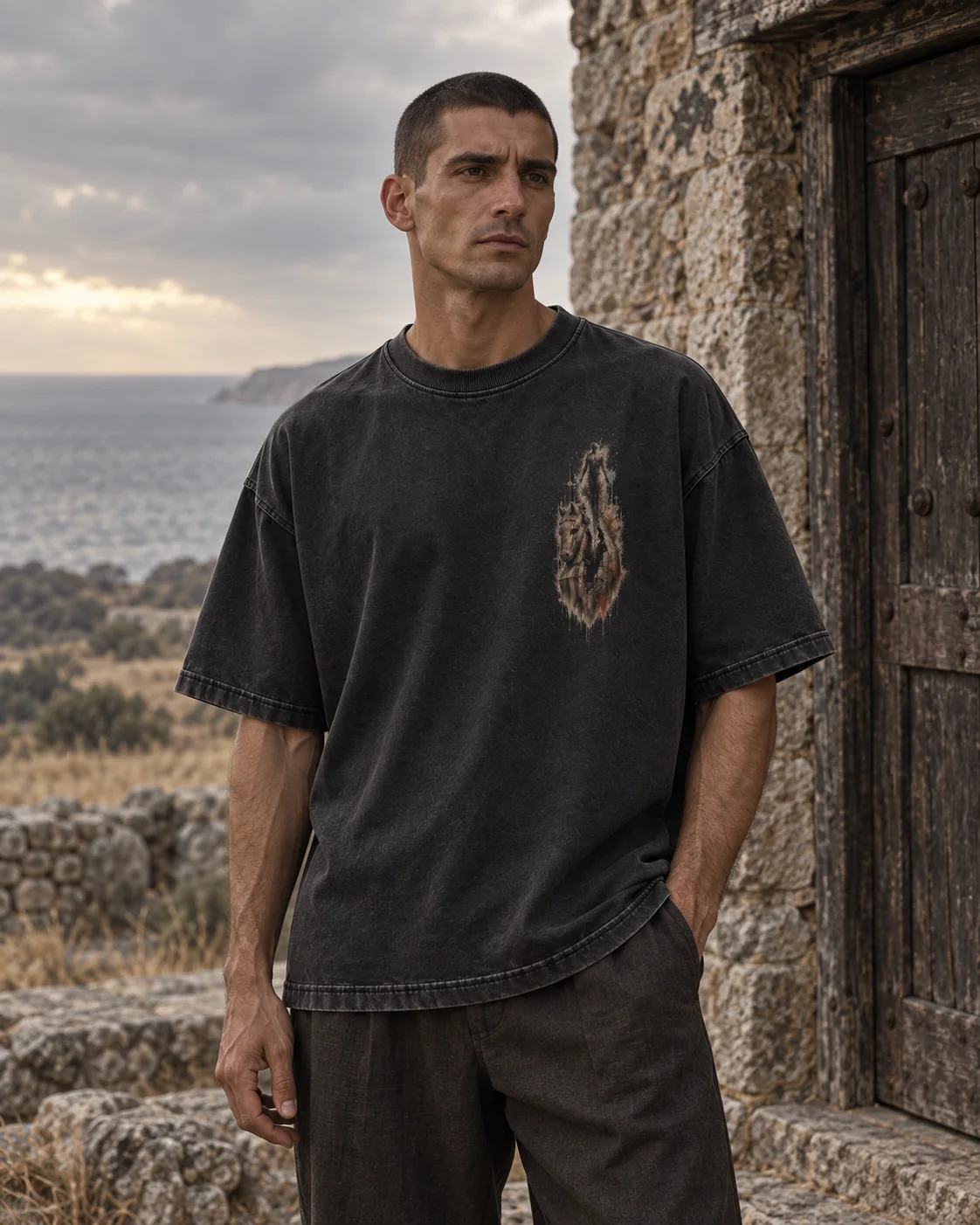
FOUNDATIONS · Salon IV · Troy
The Human
Inside the Horse
Built nine times on the same ground, destroyed nine times.
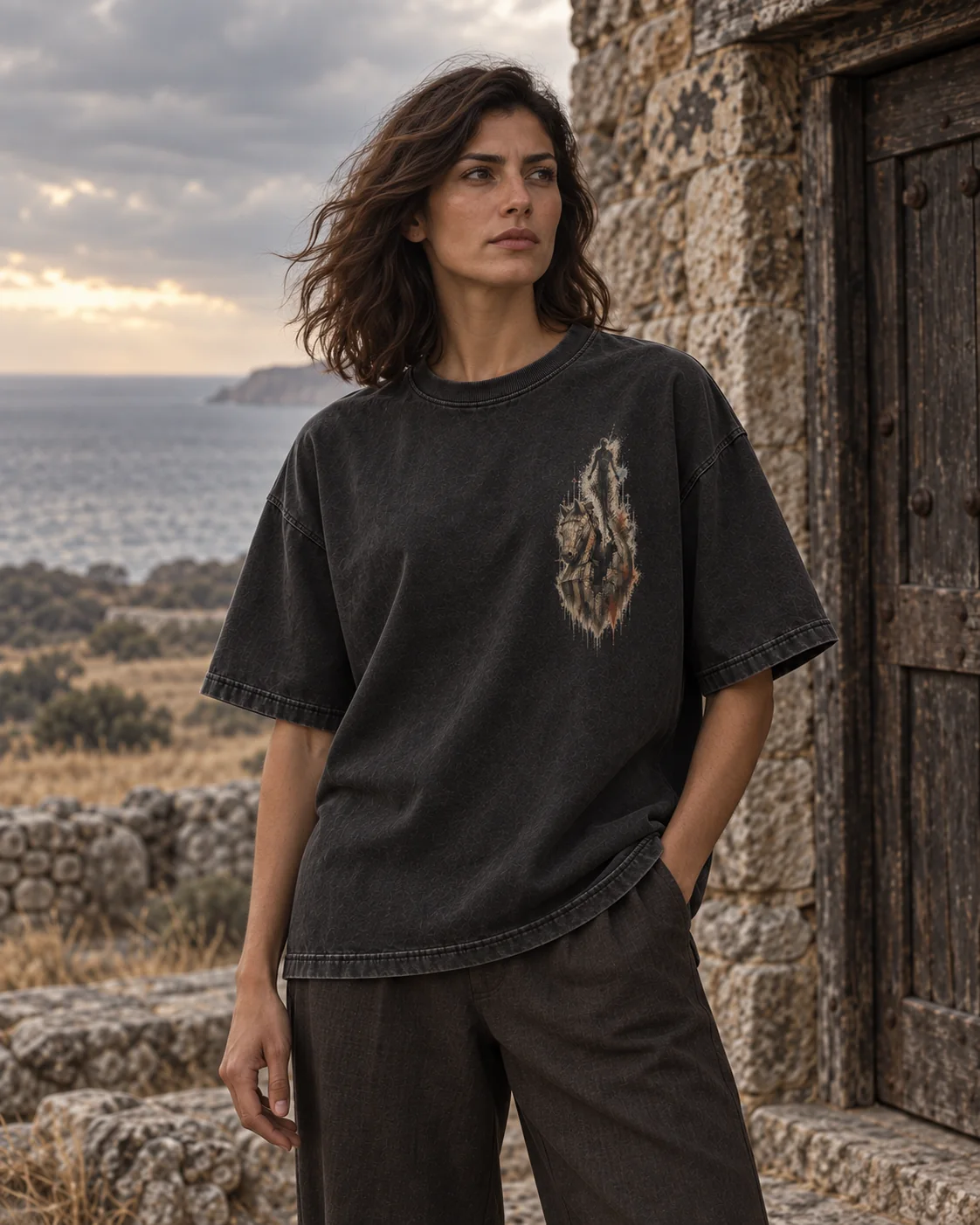
Washed Black · Coming soon
Notify me when ready →Troy is not one city but the shared memory of settlements founded and destroyed again and again on the same ground. The legend, on the other hand, gathers into a single night: the wooden horse taken inside the walls.
This design does not show the horse; it breaks it. The shattered wooden body is the shell of a story passed from generation to generation. The anonymous figure rising out of the shell’s dark hollow is the human hidden inside that story — the real bodies left behind the war, and the unseen souls.
As the figure rises it dissolves into ash and wind. The body disappears; the narrative goes on living. Like the nine layers of Troy: each city was built on the ashes of the one before.
Here the horse is not an icon but a shell that breaks. What must be looked at is what is inside.
The mound of Hisarlık, near the southern entrance of the Dardanelles. Some 4,000 years of urban history, and a far longer continuity of settlement in the Troad.
The site is not a single city. Settlement layers built one on top of another document contact, migration, trade and the transfer of knowledge between Anatolia, the Aegean and the Balkans.
Defensive walls, gates, a stone-paved ramp, bastions and the lower town. Much of the visible remains belong to Troy II and VI.
Homer’s Iliad stands at the centre of Troy’s cultural influence. But poetic narrative is not the same thing as archaeological evidence.
Schliemann’s association of the treasure he found in Troy II with Priam and Helen is no longer accepted. The likely context of the war is about a thousand years later than those finds.
For this reason narratives such as “Priam’s Treasure” and “Helen’s Jewels” were not used as fact in the design text.
- Overlapping city plans and layer numbers
- Sloping and spiralling walls, gate, stone ramp
- Mound section and archaeological stratigraphy
- The strait, the wind and trade routes
- Burnt layer, broken pottery, rebuilt wall
- The image of the horse — not as a statue, but as a shell that breaks
- Using the wooden horse whole and intact as a tourist icon
- Film aesthetics and the generic ancient-warrior cliché
- Presenting the Troy II treasure as proof of Priam
- Compressing all settlement layers into a single historical moment
- Using the Greek epic and Anatolian archaeology in a way that lets one erase the other
- Copying an excavation photograph or a museum object directly
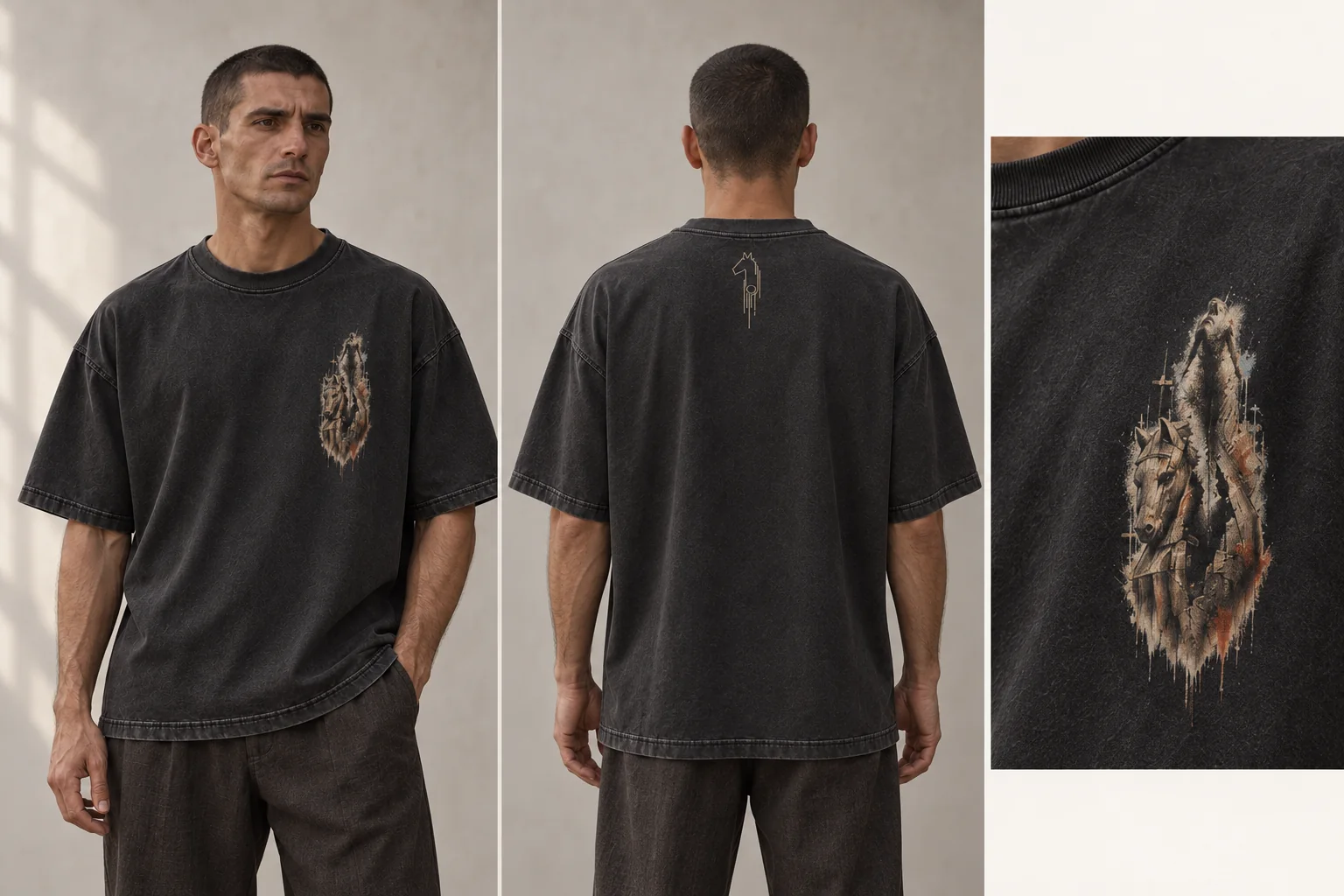
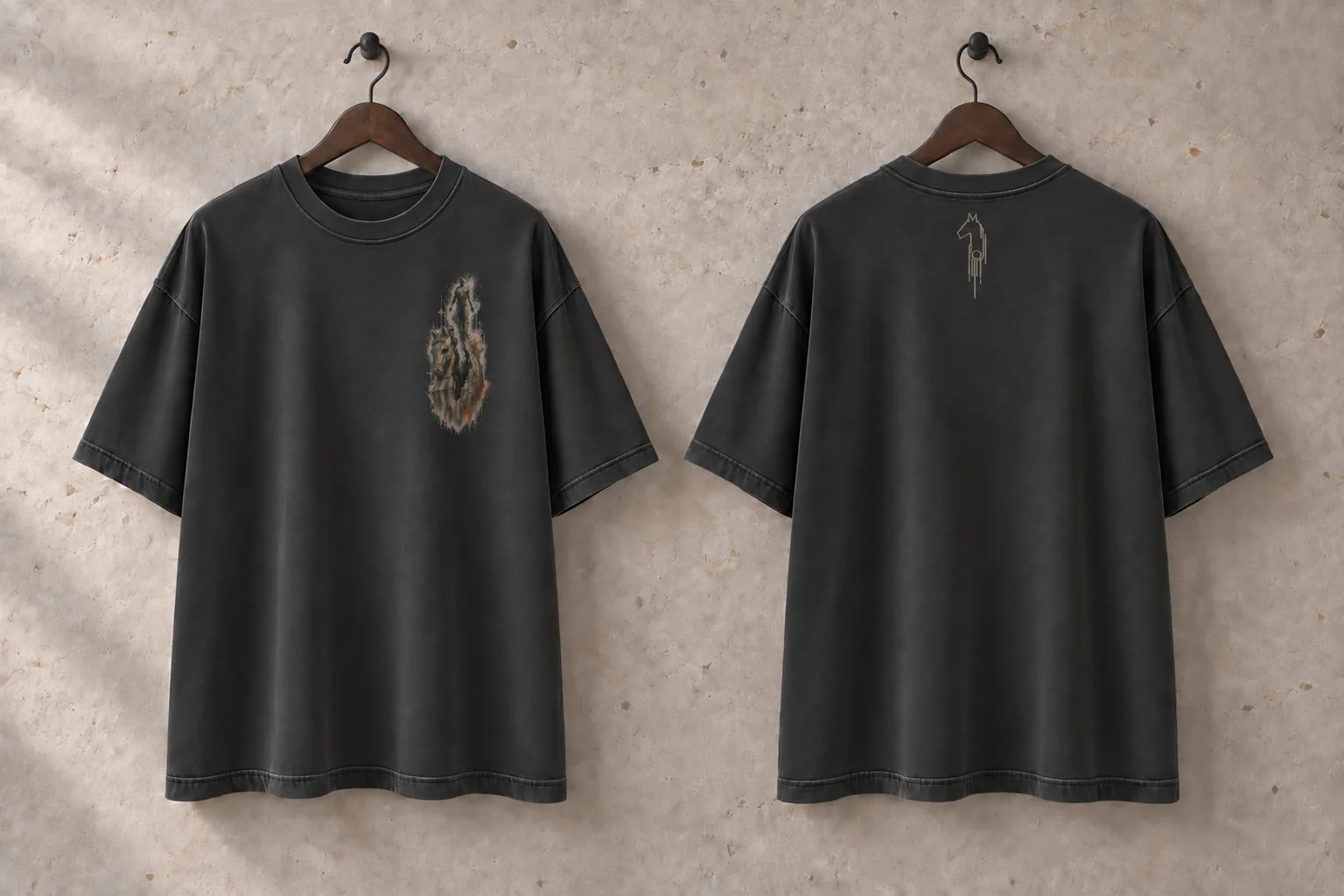
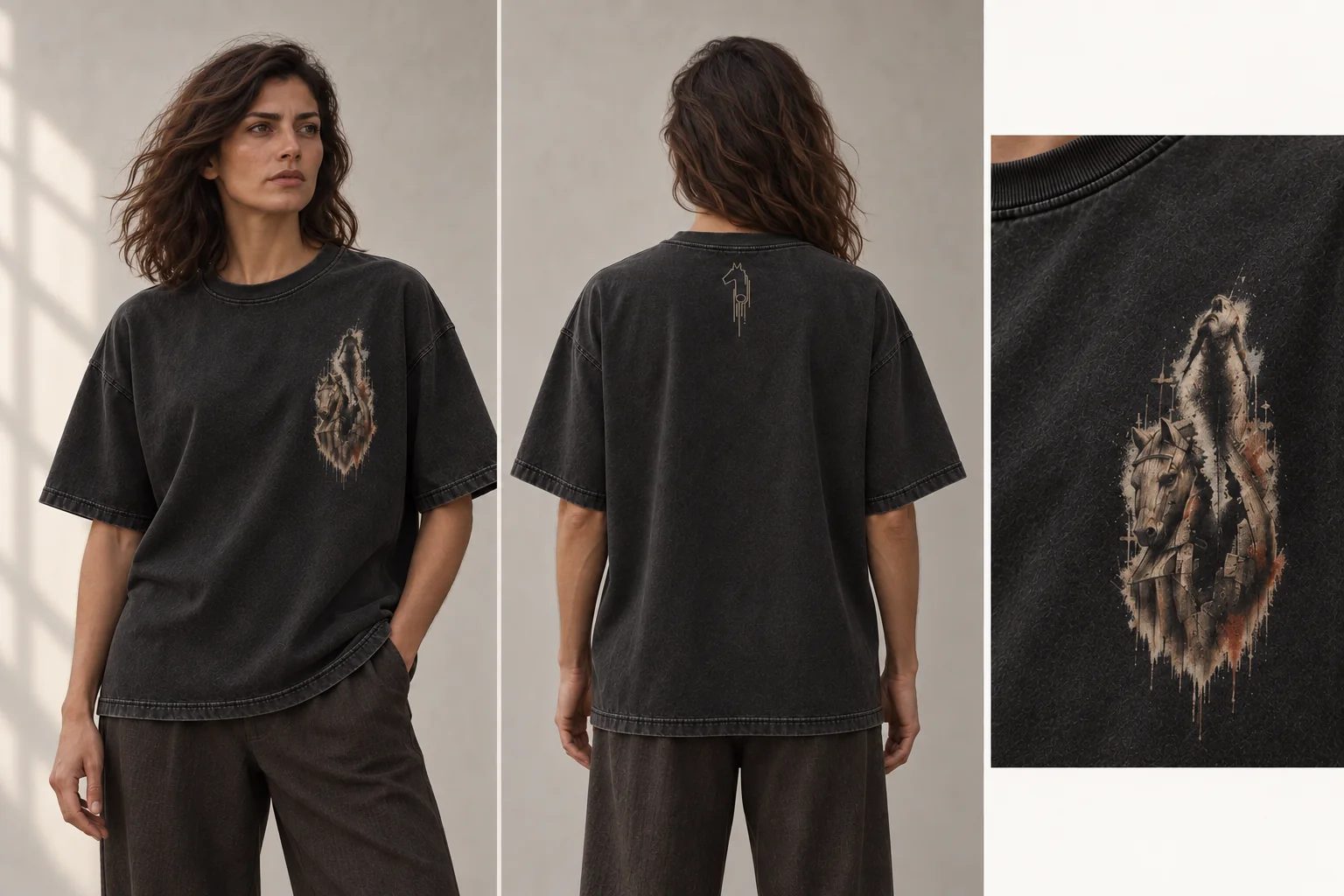
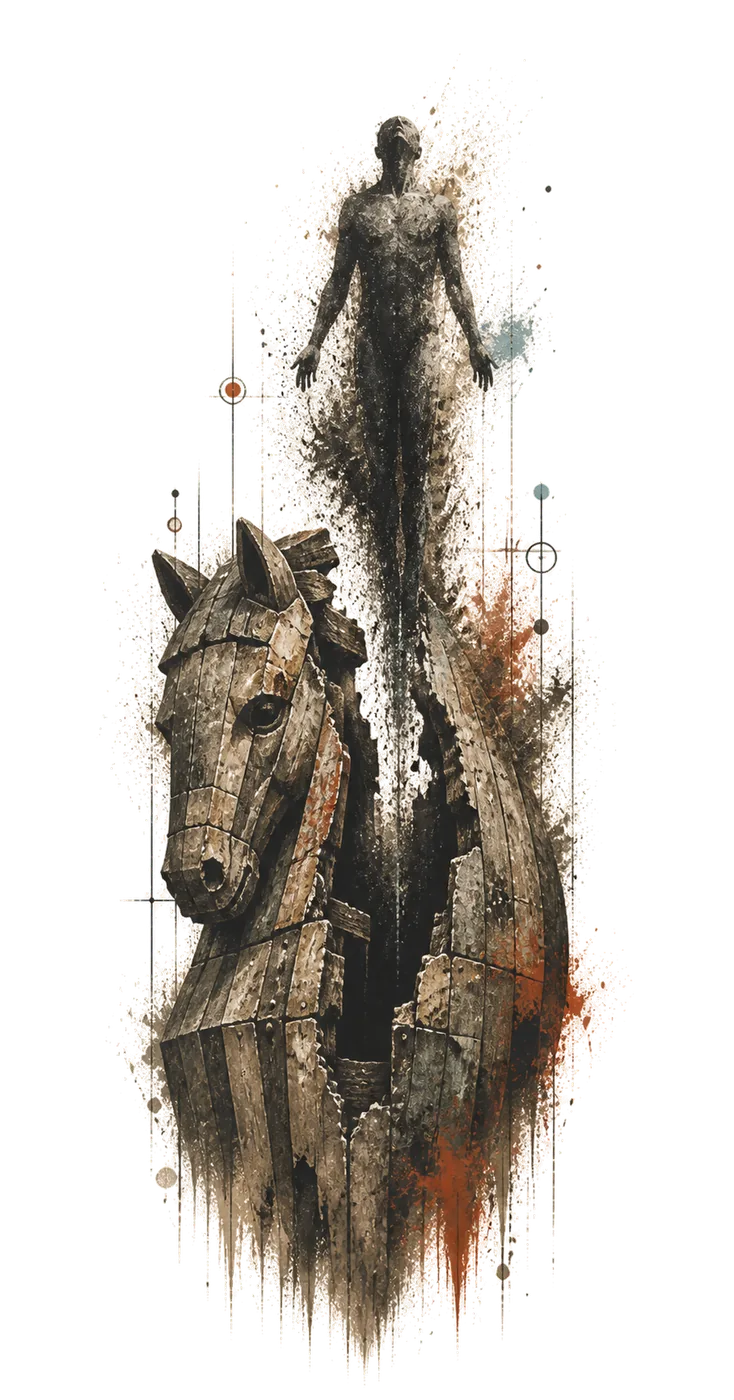 Front print
The accent colour never fills a large area — only the section number, a thin rule and the floor-plan strip. The ground stays Warm White in every salon.
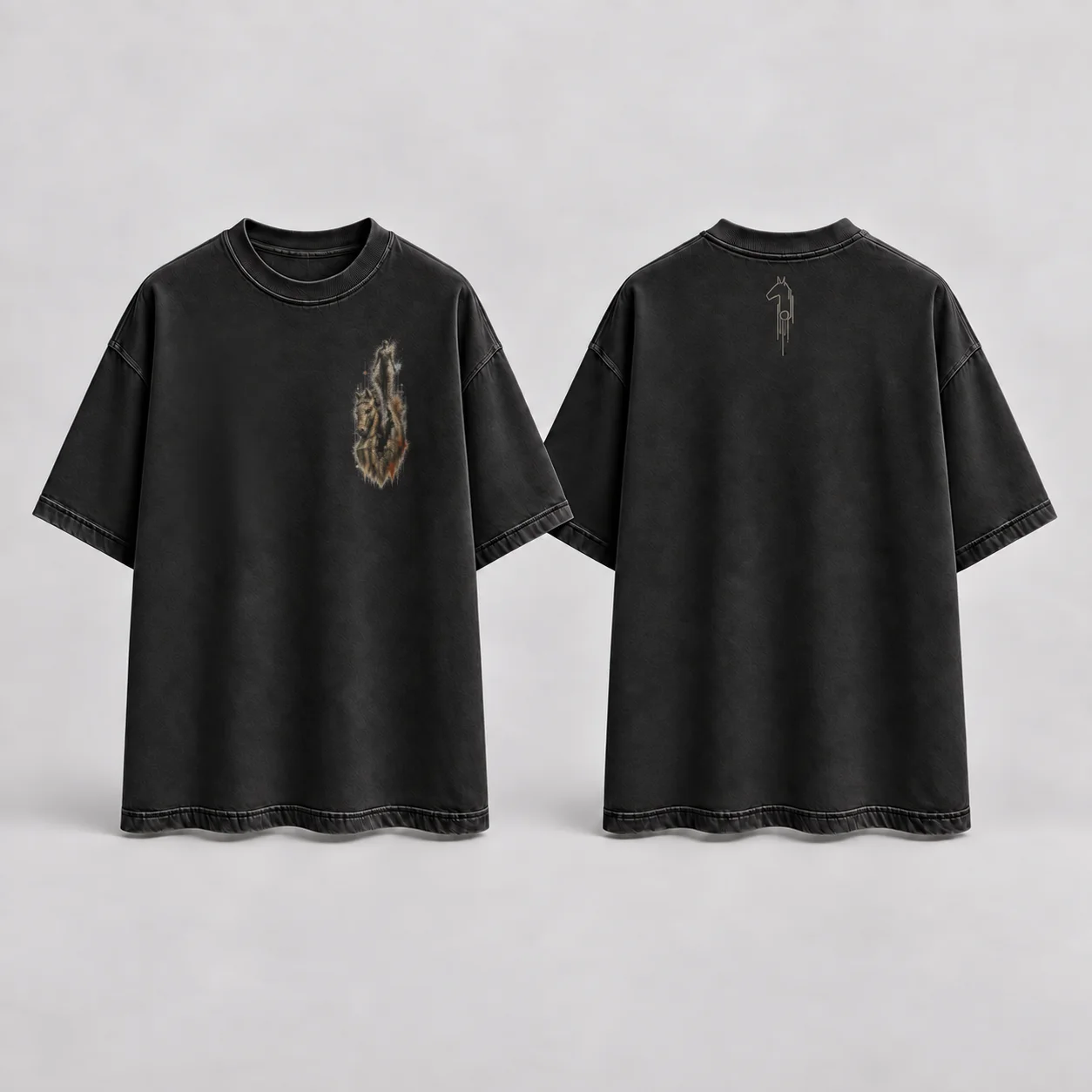
The Human Inside the Horse
Every piece belongs to a specific collection and story; it comes with a numbered Provenance Card. The card carries the story it was born from, the colour it was made in, and its place in the archive.
Not a campaign label but an archive record. If the piece changes hands, the card goes with it; its number stays in the ANATOLIYA archive.